- Glomac Galeria Hartamas, Kuala Lumpur
- +60 12-270 0122
- info@glojasaesthetic.com
Breast augmentation is one of the most popular cosmetic procedures in the world, designed to increase breast size, improve symmetry, and restore fullness lost after pregnancy, weight loss, or aging. Using implants or, in some cases, fat transfer, breast augmentation gives you a natural-looking, proportionate silhouette tailored to your body and goals.
At GLOJAS Specialist Clinic in Kuala Lumpur, breast augmentation is performed by LCP-Certified and NSR-Certified Surgeons, with a focus on natural-looking results, implant safety, and a personalized approach for every body type.
Breast augmentation increases breast size and improves shape, either by placing an implant or by transferring the patient’s own fat into the breast tissue. It’s used for cosmetic enhancement, to restore volume lost after pregnancy or weight loss, or to reconstruct breast shape after conditions such as mastectomy.
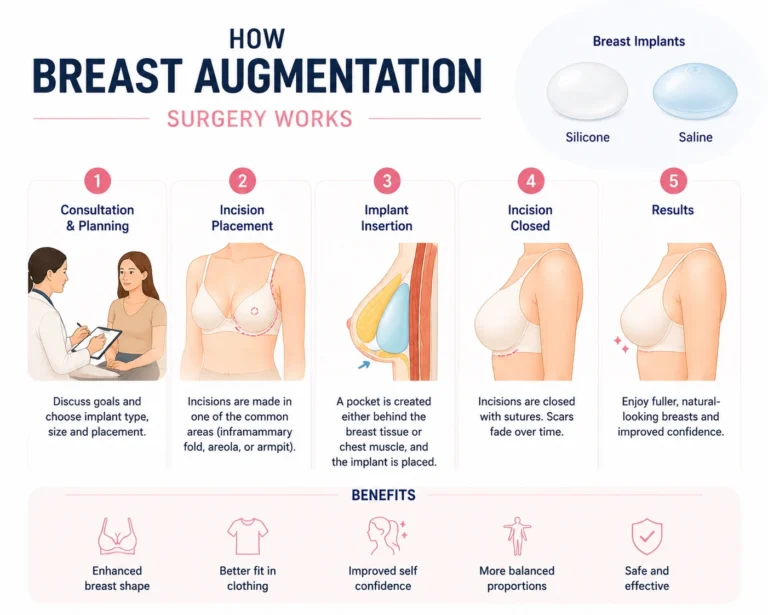
An implant — filled with silicone gel or saline — is placed either above or beneath the chest muscle through a small, carefully positioned incision. Alternatively, in fat transfer augmentation, fat is first removed from another area of the body by liposuction, processed, and then injected into the breast to add volume using the patient’s own tissue.
Common reasons include wanting fuller, more proportionate breasts; restoring volume and shape after pregnancy, breastfeeding, or weight loss; correcting natural size asymmetry; and breast reconstruction following mastectomy or injury. For many patients, the goal is less about a specific size and more about balance and proportion relative to their frame.
Breast augmentation adds volume using an implant or fat transfer, addressing size. A breast lift (mastopexy) repositions and reshapes breast tissue that has sagged, without significantly changing size, addressing shape and position. Patients with both low volume and sagging — often after pregnancy or significant weight change — may benefit from combining augmentation with a lift in a single procedure. Your surgeon can assess which addresses your specific concern.
Silicone implants are filled with a cohesive silicone gel that closely mimics the feel of natural breast tissue, making them the most commonly chosen option. Saline implants are filled with sterile salt water; they can be inserted through a smaller incision and adjusted for volume during surgery, but may feel firmer or show visible rippling, especially in patients with thin skin covering the breast.
Round implants create fullness evenly across the breast, including the upper portion, and are more forgiving if they rotate slightly out of position. Teardrop (anatomical) implants are shaped to mimic the natural slope of the breast, with less volume at the top and more at the bottom, aiming for a more understated, natural-looking result — but they can appear misshapen if they rotate.
Fat transfer uses liposuction to harvest fat from another area of the body, which is processed and injected into the breast. It avoids implanting foreign material and can also contour the donor area, but typically produces a smaller size increase than implants, since a portion of the transferred fat is naturally reabsorbed by the body over time.
Placing the implant under the chest muscle (submuscular) can create a more natural slope at the upper breast and may reduce the visibility of implant edges, particularly in patients with thinner tissue, though it typically involves a longer initial recovery. Placing it above the muscle but under the breast tissue (subglandular) usually means a shorter recovery, but implant edges may be more visible in patients with less natural tissue coverage.
The right combination of implant material, shape, incision, and placement depends on your existing breast tissue, body frame, skin thickness, and aesthetic goals. Your surgeon will guide you through these choices during a detailed consultation and sizing session.
In Malaysia, breast augmentation generally costs between RM12,000 and RM35,000, depending on implant type, technique, and clinic. Larger implant sizes and premium implant generations (such as advanced cohesive gel options) tend to sit toward the higher end of this range, while more straightforward cases with standard implants are typically more affordable.
Silicone implants generally cost more than saline implants, reflecting the material itself and, often, the more advanced generations of cohesive gel technology now available. Saline implants tend to be more budget-friendly but are chosen less often today, given the natural feel silicone offers. Fat transfer augmentation costs vary depending on how much liposuction and fat processing is required, and is generally comparable to or slightly below implant-based options for modest volume increases.
Breast augmentation for cosmetic purposes is generally not covered by insurance, though reconstructive cases (such as after mastectomy) may be. Many clinics offer installment plans or work with third-party medical financing to help manage the cost. Ask our patient coordinators about the options available at GLOJAS Specialist Clinic.
Your surgeon evaluates your breast tissue, chest wall, and skin quality, discusses your goals, and helps you visualize different implant sizes and profiles — often using sizers or 3D imaging. This consultation is where implant type, incision, and placement are finalized together.
Breast augmentation is typically performed under general anesthesia to ensure comfort and precision throughout the procedure, administered in an accredited operating theater.
The surgeon makes an incision at the agreed location, creates a precise pocket either above or below the chest muscle, and places the implant, checking symmetry and positioning carefully before closing the incision. For fat transfer, liposuction is performed first to harvest and prepare the fat before it’s injected into the breast in careful layers.
Breast augmentation typically takes one to three hours, depending on the technique and whether it’s combined with another procedure, such as a breast lift.
Expect swelling, tightness, and soreness in the chest for the first several days, generally manageable with prescribed pain medication. Most patients go home the same day or after a short observation period, and are advised to rest with minimal upper-body movement in the first few days.
Most patients return to desk-based work within a week. Light walking is encouraged early to support circulation, while upper-body exercise and heavy lifting are typically restricted for four to six weeks. Always follow your surgeon’s specific clearance, since timelines vary based on implant placement and individual healing.
A surgical support bra is generally worn continuously for the first several weeks to support the breasts as they heal and help implants settle correctly. Underwire bras are usually avoided for a period after surgery, since they can put pressure on healing tissue. Your surgeon will advise when you can transition to a regular bra.
Contact your clinic promptly if you notice:
Initial swelling can make breasts appear higher and firmer than they will ultimately settle. As swelling resolves over the following weeks and months, breasts typically soften and drop into a more natural position and shape.
Initial shape is visible within a few weeks, but implants typically take three to six months to fully settle into their final position, a process often referred to as “drop and fluff.”
Breast implants are not considered lifetime devices. On average, they last 8 to 20 years, though many women keep them longer without issue. Routine check-ups, and imaging such as ultrasound or MRI when recommended, help monitor implant integrity over time, since implants may eventually need replacement due to rupture, capsular contracture, or a patient’s personal preference for a different size or type.
Capsular contracture — when scar tissue around the implant tightens and hardens, sometimes causing discomfort or changing breast shape — is one of the most common longer-term complications and can require corrective surgery in more significant cases. Other possible complications include implant rupture or leakage, shifting or rotation of the implant, changes in nipple sensation, and asymmetry. Choosing an experienced surgeon and attending regular follow-ups helps catch and manage these issues early.
Some patients report a range of symptoms — such as fatigue, joint pain, or brain fog — that they associate with having breast implants, sometimes referred to as “breast implant illness.” This is not currently a formally diagnosed medical condition with an established cause, and research into it is ongoing. If you experience symptoms you’re concerned may be related to your implants, discuss them with your surgeon, who can evaluate your implants and overall health and advise on appropriate next steps.
Good candidates generally:
Most women with breast implants are able to breastfeed, since implants are typically placed without cutting through milk ducts or glandular tissue, though incision location (particularly periareolar) can occasionally affect nerve sensitivity relevant to breastfeeding. Pregnancy after augmentation can change breast size, shape, and skin elasticity, which may affect long-term results. If you’re planning children in the near future, discuss timing with your surgeon, since some patients choose to wait until after having children to have augmentation.
Most clinics require patients to be at least 18 years old for cosmetic breast augmentation, and some implant types have specific minimum age approvals in certain regulatory frameworks. Because implants aren’t lifetime devices, younger patients should factor in the likelihood of future replacement surgery over their lifetime as part of their decision.









Thinking about breast enhancement? At GLOJAS, our board-certified surgeons work in world-class, ISO-certified facilities — following every Malaysian health standard to keep you safe. You’re in caring hands. We focus on natural, beautiful results that boost your confidence for the long run.

Breast augmentation is a cosmetic surgery that enhances breast size and shape using implants (silicone or saline) or fat transfer, improving symmetry and fullness.
Silicone implants feel more natural and are less prone to rippling, while saline implants are adjustable, cost less, and use smaller incisions. Both are FDA-approved and safe.
Cost depends on implant type, size, surgical technique, and surgeon expertise. Book a consultation for a personalized quote based on your goals.
The procedure is done under general anesthesia, so there's no pain during surgery. Soreness, tightness, and swelling for 1–2 weeks afterward is normal and manageable with medication.
Most patients return to light activities within 1 week and normal exercise within 4–6 weeks. Final results and implant settling are typically visible after 3 months.
Yes, especially with silicone implants placed under the muscle. Implant feel depends on type, placement, size, and your natural breast tissue and skin thickness.
Most women can still breastfeed after augmentation, especially with incisions that avoid the milk ducts (like under the breast fold). Discuss placement options with your surgeon if breastfeeding is a priority.
Implants aren't guaranteed for life. Most last 10–20 years, and replacement is recommended if there's rupture, capsular contracture, or changes in appearance over time.
It's a complication where scar tissue tightens around the implant, causing firmness or distortion. It's treatable with surgery and occurs in a small percentage of patients.
Ideal candidates are healthy non-smokers with realistic expectations, fully developed breast tissue, and who desire increased breast size, improved symmetry, or restored volume after weight loss/pregnancy.
