- Glomac Galeria Hartamas, Kuala Lumpur
- +60 12-270 0122
- info@glojasaesthetic.com
Enlarged male breasts — commonly called “man boobs” — are one of the most common yet least talked-about body concerns among men. Gynecomastia surgery is a proven surgical solution that removes excess breast tissue and fat to restore a flatter, firmer, more masculine chest contour.
At GLOJAS Specialist Clinic in Kuala Lumpur, gynecomastia surgery is performed by LCP-Certified & NSR-Certified Surgeons using techniques tailored to each patient’s chest composition — whether the cause is glandular tissue, excess fat, or a combination of both.
Gynecomastia is the benign enlargement of glandular breast tissue in men, caused by an imbalance between estrogen and testosterone. It can affect one or both sides of the chest and often causes tenderness, swelling, or self-consciousness. It’s a common condition, not a sign of poor health or a lack of fitness.
The male chest normally contains a small amount of glandular tissue behind the nipple. When estrogen activity outweighs testosterone — whether due to hormones, medication, or genetics — this tissue can grow, producing a firm, sometimes tender lump beneath the nipple or a broader, rounder chest contour.
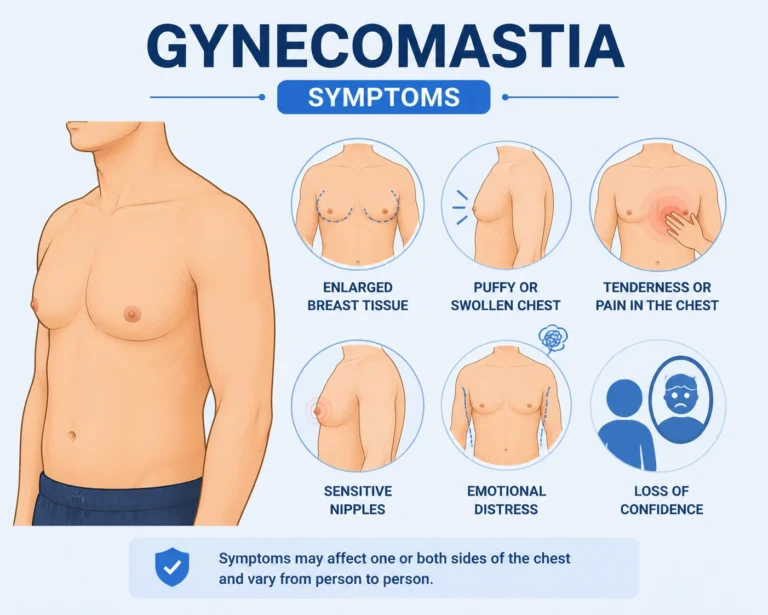
True gynecomastia involves an increase in glandular tissue, which feels firm or rubbery beneath the nipple. Pseudogynecomastia, by contrast, is simply fat accumulation in the chest with no glandular component — common in men who are overweight. The distinction matters because true gynecomastia generally needs surgical removal of glandular tissue, while pseudogynecomastia may respond to weight loss or liposuction alone. A physical exam, and sometimes imaging, is used to tell the two apart.
The Simon Grading Scale categorizes severity from Grade 1 (mild, minimal excess with no loose skin) to Grade 4 (severe, significant excess tissue with noticeable loose skin). Higher grades generally require more extensive tissue removal and, in some cases, skin tightening, which affects both technique and cost.
For hormone- or medication-related gynecomastia, addressing the underlying cause — adjusting medication, treating a hormonal condition, or losing weight for pseudogynecomastia — can sometimes resolve the issue without surgery. This works best when caught early, before glandular tissue has become fibrous and established. In teens, many mild cases resolve naturally within one to two years without any treatment.
For cases where excess chest volume is mostly fat, with little to no firm glandular tissue, liposuction alone can reshape the chest with minimal scarring, using small incisions to suction out excess fat.
When firm glandular tissue is present, it must be surgically removed — liposuction cannot break it down. Excision involves a small incision, often along the edge of the areola, to directly remove the glandular mass.
Most gynecomastia cases involve a mix of fat and glandular tissue, so combining liposuction with excision is the most common approach. This addresses both components in a single session, producing a flatter, more evenly contoured result.
| Grade | Typical Presentation | Common Approach |
|---|---|---|
| Grade 1 | Mild enlargement, no excess skin | Liposuction or minor excision |
| Grade 2 | Moderate enlargement, mild excess skin | Combined liposuction + excision |
| Grade 3 | Significant enlargement, noticeable excess skin | Combined approach, possible skin tightening |
| Grade 4 | Severe enlargement, significant loose skin | Combined approach with skin excision |
Your surgeon will confirm your grade and recommend an approach during a physical exam and consultation.
In Malaysia, gynecomastia surgery generally ranges from RM8,000 to RM18,000 or more. Mild, Grade 1 cases handled by liposuction alone tend to sit toward the lower end of that range, while Grade 3–4 cases requiring combined excision and skin tightening sit toward the higher end. Surgeons who are board-certified plastic surgeons typically charge more than general aesthetic practitioners, reflecting specialized surgical training in glandular tissue removal.
In most cases, gynecomastia surgery is classified as cosmetic and isn’t covered by standard insurance. Coverage may apply in rare cases where the condition is linked to a diagnosed medical disorder — check directly with your insurer and clinic. Request a written, itemized quote so you know exactly what’s included: surgeon’s fee, anesthesia, facility charges, compression garment, and follow-up visits.
Many clinics offer installment plans or work with third-party medical financing providers to help spread the cost. Ask our patient coordinators about the options available at GLOJAS Specialist Clinic.
Your surgeon examines your chest to determine your Simon grade, distinguish true gynecomastia from pseudogynecomastia, and review your medical history and any medications that may be contributing. This is when your surgical plan and technique are decided.
Gynecomastia surgery can be performed under local anesthesia with sedation or general anesthesia, depending on the extent of tissue removal and your surgeon’s recommendation. More extensive cases involving significant excision typically use general anesthesia in an accredited operating theater.
Small incisions are made, often at the edge of the areola or within the natural chest fold to minimize visible scarring. Excess fat is removed with liposuction, glandular tissue is excised where present, and the chest is contoured to a flatter, more natural shape. In more advanced cases, excess skin may also be trimmed.
Gynecomastia surgery typically takes one to three hours, depending on the technique used and the extent of tissue removal.
Expect swelling, bruising, and mild to moderate soreness — often compared to muscle soreness — for the first three to five days, manageable with prescribed pain medication. A compression garment is worn from the outset to reduce swelling and support the new chest contour.
Most patients wear a compression vest continuously for the first one to two weeks, then part-time for a further four to six weeks. The garment helps minimize swelling, supports healing tissue, and helps skin adapt to the new contour.
Most patients return to office-based work within three to seven days. Light cardio can often resume around week two to four, general gym activity around week four, and chest-focused exercise (bench press, push-ups) is typically restricted for around six weeks. Always follow your surgeon’s specific clearance rather than a generic timeline.
Contact your clinic promptly if you notice:
Immediately after surgery, swelling can obscure the final shape of the chest. As swelling resolves over the following weeks and months, a flatter, more defined contour becomes visible.
Initial improvement is visible within the first few weeks, but final contour is typically seen at three to six months, once all residual swelling has resolved and tissues have fully settled.
Removed glandular tissue does not grow back, so results are generally permanent. That said, recurrence is possible if a patient gains significant weight, uses anabolic steroids, or develops a new hormonal imbalance. Maintaining a stable weight supports lasting results.
Incisions are typically small — often just 3 to 4mm at the edge of the areola or within a natural chest fold — and scars generally fade to faint lines within six to twelve months. Larger, Grade 4 cases involving skin removal will have more visible scarring, which your surgeon will discuss during your consultation.
Good candidates generally:
In teenage boys, gynecomastia linked to puberty often resolves naturally within one to two years, so surgeons generally recommend waiting until hormone levels stabilize — usually by the late teens — before considering surgery, unless the condition is causing significant physical or psychological distress. In adults, gynecomastia is less likely to resolve on its own, making surgery a more common and effective option once other causes have been ruled out.
See a doctor before considering surgery if you notice pain, a hard or irregular lump, nipple discharge, or dimpled skin — these can, in rare cases, signal a more serious underlying condition and should be medically evaluated first. A doctor can also check for medication or hormonal causes that might be treated without surgery.












At GLOJAS, NSR-certified surgeons perform gynecomastia surgery using MOH-approved VASER and PAL technology. We safely remove glandular tissue and fat to create a flatter, masculine chest. Procedures follow strict Ministry of Health Malaysia standards for patient safety and proven results.



Gynecomastia is the enlargement of male breast tissue caused by a hormonal imbalance between estrogen and testosterone. It can affect one or both breasts and occurs at any age.
Common causes include puberty-related hormone changes, aging, obesity, certain medications, steroid use, and underlying medical conditions affecting hormone levels.
Puberty-related gynecomastia often resolves within 6 months to 2 years. If it persists beyond this or is caused by other factors, surgery is usually needed for permanent removal.
Gynecomastia involves firm, rubbery glandular tissue beneath the nipple, while chest fat (pseudogynecomastia) is soft and spreads more evenly. A doctor can confirm through physical exam or ultrasound.
Cost depends on the grade of gynecomastia, technique used (liposuction, excision, or both), and surgeon expertise. Book a consultation for a personalized quote.
Surgery is performed under anesthesia, so there's no pain during the procedure. Mild soreness and swelling for 3–7 days afterward is normal and managed with medication.
No, once glandular tissue is surgically removed, it does not grow back. However, significant weight gain or steroid use afterward can cause new fat accumulation.
Most patients return to work within 3–5 days and resume light exercise in 2–3 weeks. Full recovery and final results are typically seen within 3–6 months.
Scarring is minimal and usually placed along the areola edge, making it barely noticeable once healed. Scar visibility depends on technique and individual healing.
Yes, it's often combined with liposuction of the chest/abdomen or a tummy tuck for more comprehensive body contouring in a single session.
